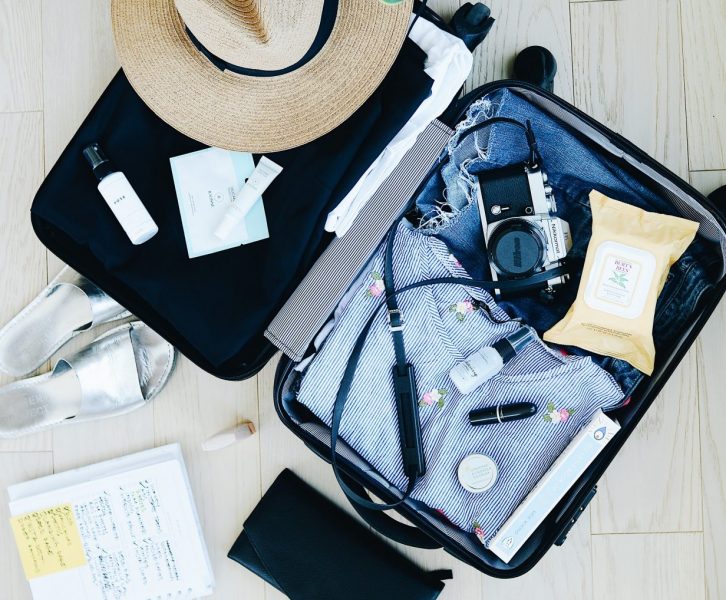
Airlines collected over $7.5 billion in checked bag fees in 2026. A meaningful percentage of that came from travelers who could have carried everything on — but packed for every hypothetical scenario instead of the trip they were actually taking. The average person brings enough outfits for 10 days on a 5-day vacation and wears the same 4–5 looks the whole time.
Here’s what to actually bring.
The Clothing Count That Works for Any Spring Break Destination
The formula is the same for Miami Beach, Cancun, the Dominican Republic, or Lake Havasu. Hot destination, 5–7 days, activities split between the beach, eating out, and a few nights out. This is the exact count that covers all of it:
- 3 swimsuit bottoms — They dry overnight. Rotating three gives you a fresh option every day without washing anything mid-trip.
- 2–3 swimsuit tops — Mix-and-match separates unlock more combinations than matching one-pieces. Two tops work with all three bottoms differently.
- 2 casual daytime dresses — A sundress or linen dress doubles as a beach cover-up and a lunch outfit. One neutral, one with color or pattern.
- 2 going-out outfits — One two-piece set and one dress. That covers every evening you’ll actually go out. Three is wishful thinking.
- 2 pairs of shorts — One denim, one linen or athletic. These are your non-beach daytime staples.
- 3–4 lightweight tops — Ribbed tanks, cotton crop tops, anything that layers easily and doesn’t wrinkle badly in a compressed bag.
- 1 light layer — A linen button-down or an oversized cardigan. Planes, restaurants, and air-conditioned bars are cold. You need exactly one, not three.
- Underwear for each day, plus two extras. Non-negotiable.
That’s roughly 16–18 clothing items. Most people pack 30 or more and wonder why their bag won’t close.
The Neutral Bottoms Rule
Pack your shorts, swimsuit bottoms, and cover-ups in black, white, tan, or navy. Every one of those colors works with every top you bring. Put color and pattern in your tops — they’re easier to swap and re-wear without the outfit feeling repetitive. A black bikini bottom and tan linen shorts will pair with every single top in your bag. That one constraint doubles your functional outfit count without adding a single item to the bag.
The Lay-Everything-Out Step
Before you pack, lay every item on your bed. Look at the full pile. Now put half of it back. This sounds excessive. It isn’t. Every experienced traveler does this, and the clothing that goes back is always the same: a dress never worn before, shoes that look great but hurt after an hour, a fourth swimsuit for the scenario where all the others are wet simultaneously. Items you’ll actually wear on vacation are items you’ve already worn before. Pack those.
Two things people consistently forget until they’re already there: a strapless or adhesive bra for going-out tops, and a small crossbody bag that fits a phone, one card, and a tube of sunscreen. You’ll use that crossbody every single day. A clutch is not the same. A tote is too much. The small crossbody is the move.
Shoes Are Where Every Packer Goes Wrong
Three pairs. One sandal for beach and daytime. One sneaker for walking days. One going-out shoe — a strappy heel or a low wedge.
Those three cover 95% of every scenario on any spring break trip. A fourth pair is a mistake you’ll feel at the airport. Shoes don’t compress. They’re the heaviest category in your bag by ratio of usefulness to space, and every extra pair costs you the room of three rolled t-shirts. Pack three and stop. The sandal needs to be broken in — this is not the trip to debut new footwear. The sneaker should be neutral enough to work with both shorts and casual dresses. One shoe solving two problems is the whole game.
Swimwear: Where to Spend vs. Where to Save
The quality gap in swimwear is real. A cheap bikini may photograph identically to a $120 set, but chlorine and UV exposure degrade low-quality fabric fast — sometimes within a single trip. The elastane breaks down, colors fade, and the fit warps. Here’s an honest breakdown of brands worth knowing:
| Brand | Price Range | Best For | Durability | Verdict |
|---|---|---|---|---|
| Aerie | $20–$50 | Budget pick, casual beach days | 1–2 seasons | Best value for budget travelers |
| Frankies Bikinis | $80–$140 | Mix-and-match separates, style-forward | 3+ seasons | Worth it if you swim often |
| Triangl | $80–$150 | Bold colors, neoprene construction | High | Best for active water sports days |
| Old Navy | $15–$35 | One-and-done vacation piece | Low–Moderate | Fine for one trip, that’s it |
| Hunza G | $160–$200 | One-size crinkle fabric, universal fit | Very High | The only splurge that genuinely earns it |
Clear verdict: Frankies Bikinis if you want quality that lasts multiple seasons, Aerie if the budget is the priority. Hunza G is the one case where “expensive but worth it” is actually accurate — their crinkle neoprene construction is genuinely one-size across a real range of body types, and the suits hold shape through years of sun and chlorine. Old Navy is for one trip. Don’t expect it to survive a second summer.
The Beach Bag Rule
A large mesh tote or straw bag handles everything you need: sunscreen, a towel, snacks, a book, a change of clothes. Look for one that packs flat for travel and has no heavy metal hardware — brass rings and clasps add weight and rust near saltwater. The Stoney Clover Lane nylon tote ($45–$65) hits both marks and holds up well to real beach use. Skip anything marketed as a “designer beach bag.” The point is to fill it with sand and not stress about it.
What to Buy There Instead of Packing
Don’t pack a full-size bath towel from home unless it’s a compact microfiber travel version. Most resort hotels provide beach towels at the pool or beach access point. Airbnbs — email ahead and confirm before you go. A standard bath towel takes up a third of a carry-on on its own. Cheap flip flops are also fine to buy at your destination — they’re inexpensive everywhere, sand destroys them fast regardless of price, and they take up real bag space you could use for something else.
Sun Protection Is the Whole Game
The UV index in Cancun, Miami, and the Caribbean consistently hits 9–11 in March and April. That’s classified as “extreme” on the WHO scale. At UV 10, unprotected light skin burns in under 15 minutes. Darker skin tones are still at serious risk for cumulative UV damage even without a visible burn. Sunscreen is as mandatory as your ID. This is not a soft recommendation.
The products that actually perform:
Supergoop! Unseen Sunscreen SPF 40 ($38 for 1.7oz, $22 for the 0.5oz travel size) is the current benchmark for face sunscreen. It’s invisible on every skin tone, doesn’t pill under tinted moisturizer or foundation, and doesn’t smell like sunscreen. The travel size passes TSA liquid limits and fits in any crossbody or beach bag.
EltaMD UV Sport SPF 50 ($31, 3oz) is the pick for body coverage. It’s water-resistant for 80 minutes — the highest rating the FDA allows any sunscreen to claim. It absorbs without leaving the greasy, sticky residue that most body sunscreens do. Dermatologists recommend it constantly because it consistently delivers what it says on the label.
ILIA Beauty Super Serum Skin Tint SPF 40 ($48) is the product for going from pool deck to dinner without a full makeup step. Light coverage, SPF built in, looks like skin. One product, three functions.
The Reapplication Problem
Most people apply sunscreen once in the morning and consider themselves covered for the day. They aren’t. Reapplication is required every two hours of direct sun exposure. Every time you towel off, you’ve removed most of the sunscreen on your skin — not some of it, most of it. A spray sunscreen for reapplication over dry skin makes this practical: the Banana Boat Simply Protect Sport SPF 50+ Spray ($10–$12) goes on cleanly over dry skin without disrupting your look or requiring a full rub-in. Keep it in your beach bag and set a phone reminder. The burn that wrecks day two of six always happens to the person who “put sunscreen on in the morning.”
After-Sun Care: Always Needed, Often Forgotten
Pack one after-sun product. The Bondi Sands Aloe Vera Cooling Gel ($12) reduces redness and stops peeling faster than generic store-brand aloe. Apply it before bed even on days you don’t visibly burn — UV damage accumulates below the surface even without a visible sunburn, and daily after-sun application keeps your skin barrier intact through a full week of direct exposure. It takes 30 seconds and saves you two lost beach days.
Hair and Scalp Protection
Salt water and chlorine strip moisture and cause breakage fast, especially over a full week. A leave-in conditioner spray applied before entering the water cuts the damage significantly. Moroccanoil All In One Leave-In Conditioner ($34) is the premium pick; Not Your Mother’s Curl Talk leave-in spray ($8) is the budget option that genuinely works. Your scalp burns too — a wide-brim hat or a dedicated SPF hair mist like the Coola Scalp and Hair Mist SPF 30 ($32) covers that gap if you’re spending long stretches in direct sun without a hat.
How to Fit All of This in a Carry-On
Is a carry-on realistic for spring break?
Yes. For 5–7 days with the clothing count above, a standard carry-on — roughly 40L capacity, maximum dimensions 22 x 14 x 9 inches for most domestic airlines — handles it without issue. The Away Carry-On ($295, 39.8L) and the Monos Carry-On Pro ($245, 38L) are both well-reviewed for durability, wheel quality, and smart internal layout. If the price is a barrier, the AmazonBasics hardside spinner at $55–$75 performs the same function; you lose longevity over years of heavy use but the basic carry-on mechanics are identical.
What packing system actually works?
Compression packing cubes. The Gonex compression cube set ($20 on Amazon) cuts clothing volume roughly in half when compressed. Roll your clothes before loading the cubes — rolling reduces wrinkles in lightweight fabrics and saves 15–20% more space than flat folding. Shoes go in a shoe bag or a hotel shower cap, placed on the sides or at the bottom of the bag. Toiletries in a clear quart bag for the security checkpoint.
The single thing that tanks a carry-on plan faster than anything else: too many shoes. They don’t compress, they’re rigid, and they claim space no matter how cleverly you arrange them. Three pairs is the ceiling for a comfortable carry-on pack. Four or more and you’re checking a bag regardless of whether you planned to.
When does checking a bag actually make sense?
For trips longer than 8 days. For itineraries mixing beach weather with a cooler city leg that demands a different clothing category entirely. For anyone bringing sports or water equipment. A checked bag costs $35 each way on most domestic US carriers — $70 round-trip. That’s real money, but it’s a fixed and predictable cost. If the alternative is 45 minutes of packing stress and a bag that’s miserable to maneuver, do the math for your own situation. There’s no prize for suffering through an overstuffed overhead bin.
Packing light is a skill that compounds. The people who travel well aren’t minimalists by nature — they’ve just made the same mistakes before and stopped repeating them. Start with the count above, hold to it, and the trip after this one will take half the time to pack.