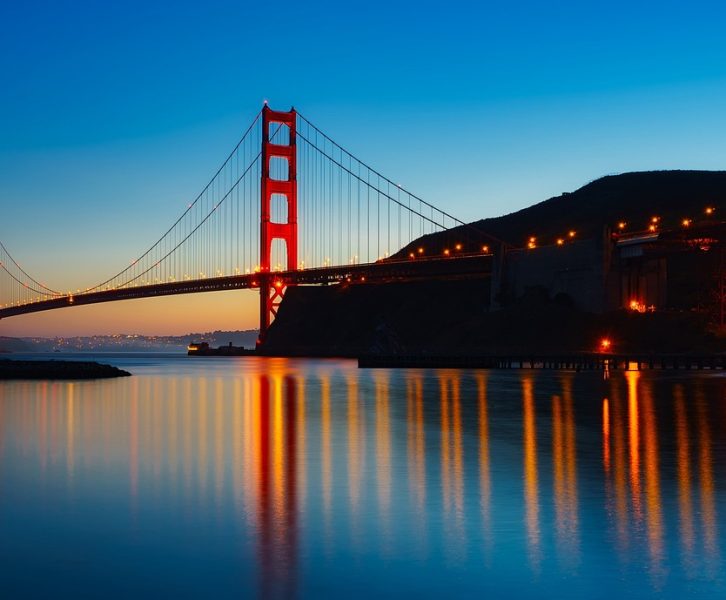
San Francisco sits at the edge of the Pacific, hemmed in by ocean, bay, and hills. That geography doesn’t just create great views — it drives a fashion logic that visitors rarely anticipate and locals have quietly perfected over decades.
The Fog Factor: Why SF’s Climate Is a Master Class in Layering
San Francisco’s weather defies California expectations. The average high in July is 65°F — cooler than Chicago in summer, cooler than Denver most of spring. The marine fog layer, known locally as Karl the Fog, rolls in off the Pacific through the Golden Gate gap, drops temperatures 10–15°F within minutes, and doesn’t behave uniformly across the city. Some neighborhoods shake it off by 10am. Others keep it until dinner.
This isn’t just climate trivia. It’s the single most important factor shaping SF’s distinct fashion culture.
Why June Fog Catches Everyone Off Guard
“Junuary” is what locals call it. June in San Francisco is frequently colder and foggier than April. Tourists land in shorts expecting California summer. They find 57°F and a 15mph headwind off the ocean.
Karl forms when cold Pacific upwelling meets warm inland air. It funnels through the natural gap at the Golden Gate, cooling the western neighborhoods — Outer Sunset, Outer Richmond, Ocean Beach — by up to 15°F compared to the Mission or Potrero Hill, which sit in a fog shadow just two miles east. On a July afternoon, you can stand on Dolores Park in a t-shirt and drive twenty minutes to Baker Beach needing a jacket. Same city. Same hour.
For fashion, this means a single SF day can span three effective temperature zones. Morning coffee at 55°F. Midday Mission walk at 72°F. Evening at Lands End back to 50°F with wind chill. The wardrobe strategy that works isn’t a heavy coat — it’s a system: a merino or performance base layer that functions standalone, a packable mid-layer, and a wind-resistant shell light enough to tie around your waist when the sun comes out. Not a parka. Not a denim jacket. Something that actually compresses.
The Microclimate Map That Changes Every Morning
SF contains over 30 distinct microclimates within 49 square miles. Locals check the neighborhood forecast, not just the city forecast. Dressing for the Outer Sunset on Tuesday is a fundamentally different calculation than dressing for the Mission on the same day.
- Sunset and Richmond: Almost always 8–12°F colder than downtown. Fog persists until mid-afternoon through most of summer.
- Mission and Potrero Hill: The warmest pockets. Can reach 75°F+ when the western side of the city is still gray.
- Noe Valley: A protected bowl that gets noticeably more sun than surrounding neighborhoods — residents here will tell you the microclimate was why they bought the house.
- SOMA and Financial District: Variable by block. Warms mid-morning but wind tunnels between glass towers add a real chill factor.
- Haight and Inner Sunset: Transitional — swings either direction depending on Karl’s reach that particular afternoon.
The practical upshot: a layer you can remove and stuff into a bag is not optional in SF. It’s the core piece of any outfit that needs to function across the city’s geography without making you look like you packed for two different climates.
Five Nature Spots, Five Different Outfit Demands
San Francisco’s accessible natural spaces range from manicured park paths to exposed coastal ridgelines. Each environment creates different demands, and the gap between what looks right and what actually performs is widest when you’re outdoors. Here’s how the terrain actually breaks down.
| Location | Terrain | Typical Conditions | What Works | What Fails |
|---|---|---|---|---|
| Golden Gate Park | Paved and gravel paths, mostly flat | Mild fog, wind near the ocean-facing end | Light layers, clean trail runners or Chelsea boots | Flip-flops on the west end in July |
| Lands End Trail | Cliff-side dirt path, uneven rock sections | Persistent wind, cold year-round | Wind-resistant outer layer, grip-soled boot | Fashion sneakers — lateral ankle roll risk on rocky stretches |
| Marin Headlands | Steep fire roads, fully exposed ridgelines | Strongest consistent winds near SF, gusts past 40mph | Full waterproof shell, synthetic insulation mid-layer | Cotton layers — absorb moisture, fail in sustained cold wind |
| Baker Beach | Sandy beach, full coastal exposure | 55°F ocean average, fog frequent even in August | Wind shell, closed-toe shoes, always bring an extra layer | Swimwear — water is cold, genuinely not swimmable most months |
| Muir Woods | Moderate trails, old-growth redwood canopy | Damp, cool, sheltered from wind | Water-resistant footwear, light rain layer | White sneakers — trail mud is persistent, paths drain slowly |
Where Fashion Ends and Function Begins
Marin Headlands is the clear dividing line. Wind at Hawk Hill — 923 feet, directly above the Golden Gate — can gust past 40mph on a perfectly clear blue day. A structured blazer does nothing there. The Arc’teryx Atom LT Hoody ($259) or the Patagonia Nano Puff Jacket ($249) are the right calls. Both use synthetic insulation that retains warmth when wet. Both pack to roughly water-bottle size. Neither reads as a hiking jacket in any urban context — you can walk off the ridge and into a Sausalito café without a wardrobe shift.
Below that elevation, the balance shifts back. For Golden Gate Park, the Embarcadero, or Dolores Park, a well-chosen mid-layer covers everything without sacrificing style. The Headlands is where function wins cleanly and completely — everywhere else, you have room to negotiate the balance.
The Brands That Actually Understand SF’s Outdoor Aesthetic
The right SF outdoor fashion isn’t REI-catalog functional or runway-impractical — it lives precisely in the middle. Technical enough to handle Karl, polished enough to walk into a Hayes Valley restaurant afterward without changing. A handful of brands have built their entire identity around exactly this position.
Taylor Stitch, founded in SF’s Dogpatch neighborhood, is the clearest example. Their Chore Coat ($228) uses a waxed canvas outer that sheds light rain without looking industrial. It’s a legitimate fog-layer that functions from Golden Gate Park to the Ferry Building to a dinner in the Castro — no outfit change required. The wax finish also ages well, which fits SF’s buy-once mentality perfectly.
Mission Workshop, also SF-based, designs outerwear with Bay Area commuters and weekend trail users as the explicit brief. Their Sanction Jacket (~$285) is wind-resistant, clean-lined, and was built with the city’s shoulder-season climate as the actual design starting point — not as an afterthought to a broader outdoor catalog. Both brands are worth understanding as a lens into what SF considers stylish outdoor dressing.
What About Rain Gear That Doesn’t Look Like Rain Gear?
SF gets roughly 22 inches of rain per year, nearly all of it between November and March. The typical SF rain is light, persistent drizzle — not downpour — so water-resistant is usually the right spec, not fully waterproof. The Marmot PreCip Eco Jacket ($110) is the practical pick: fully seam-sealed, packs into its own pocket, available in neutral colors that read as a real jacket rather than emergency rain gear. For those who want harder crossover credibility, the Rapha Trail Jacket ($275) threads the needle most convincingly — cycling-influenced clean lines, legitimate weather performance, and a silhouette that works in any SF neighborhood without explanation.
What Locals Actually Wear to Golden Gate Park
Walk Golden Gate Park on a Saturday and the SF aesthetic is on full display. It’s not outdoor gear. It’s not streetwear. It’s dark denim or technical trousers, a merino or performance base layer, and a packable mid-layer. The Patagonia Better Sweater Fleece ($139) is essentially the unofficial mid-layer of the city — you’ll see three of them before you reach the Conservatory of Flowers.
Footwear is almost always Blundstone Chelsea boots ($220–$280) or a clean trail runner. The Blundstones in particular have become the unofficial shoe of SF: waterproof, grip-soled, minimal enough to pair with anything from jeans to a dress. They handle the Lands End trail at 9am and dinner in the Castro at 8pm without a swap. That dual-use reliability is exactly what SF fashion culture values most.
The Biggest Mistake SF Nature Visitors Make
They dress for the city forecast, not the specific location.
Seeing “San Francisco: 63°F” on a weather app tells you essentially nothing when your destination is Lands End or the Marin Headlands, where wind chill brings the effective temperature closer to 48°F. Always search the specific trailhead or neighborhood — SF’s microclimates are not minor variations. They are the difference between a comfortable afternoon and cutting the hike short after forty minutes.
How SF’s Natural Environment Is Driving Sustainable Fashion Choices
San Francisco’s relationship with its natural spaces isn’t seasonal or aspirational — it’s daily and proximity-based. The outdoor culture here runs year-round, and it has shaped how residents approach buying clothes in ways that extend well beyond weekend hiking prep.
- Buy-once mentality. SF buyers lean hard toward durable goods. Patagonia’s Worn Wear program — repair over replace — has a committed following here. Multiple vintage outerwear shops operate steadily across the city because SF buyers actively choose quality-that-lasts over fast-fashion replacement cycles. A jacket bought in SF is expected to last ten years, not two.
- Natural and recycled fibers. Merino wool brands like Smartwool and Icebreaker, and recycled synthetics from Patagonia’s recycled polyester line, dominate the functional SF wardrobe. Cotton is genuinely stigmatized in trail-adjacent circles — it retains moisture, dries slowly, and becomes a liability in Marin Headlands wind conditions where the temperature can drop fast.
- Terrain-adjacent colorways. Earth tones, fog grays, Pacific blues. SF’s outdoor fashion palette mirrors the landscape directly. Bright neons and maximalist prints are far less common than in East Coast outdoor culture — the city dresses to complement its environment, not contrast with it.
- Dual-use as a buying criterion. The best-selling outerwear in SF works on a trail and in a client meeting. The Arc’teryx Veilance line ($400–$900) was designed specifically for urban professionals who also hike — and it sells well here because the use case is genuinely common. Morning ridge run, afternoon Zoom, evening dinner in Hayes Valley. One jacket handles all of it.
- Local brands over national retail. Taylor Stitch and Mission Workshop both manufacture at small scale with SF-specific design roots. Local buyers support this — partly values-driven, partly because clothes actually designed for SF weather perform better in SF weather than gear engineered for conditions elsewhere.
The deeper pattern: San Francisco’s natural environment doesn’t just influence what people wear outdoors. It has shaped the entire fashion identity of the city — practical, understated, durability-first, and stubbornly resistant to trends that can’t survive a cold afternoon headwind off the Pacific.
| Scenario | Best Pick | Why It Works |
|---|---|---|
| Golden Gate Park casual walk | Patagonia Better Sweater + Blundstone Chelsea | Packable warmth, trail-ready footwear, versatile all day |
| Lands End coastal trail | Arc’teryx Atom LT Hoody + grip-soled boot | Wind resistance, handles uneven rocky terrain safely |
| Marin Headlands day hike | Patagonia Nano Puff + Marmot PreCip Eco shell | Full weather protection, both pack down to near nothing |
| Mission or Dolores Park (sunny day) | Merino base layer alone | Warmest SF microclimate — no extra layer needed |
| Muir Woods trail | Water-resistant shoes + Taylor Stitch Chore Coat | Damp canopy, mud-prone paths, light drizzle always possible |