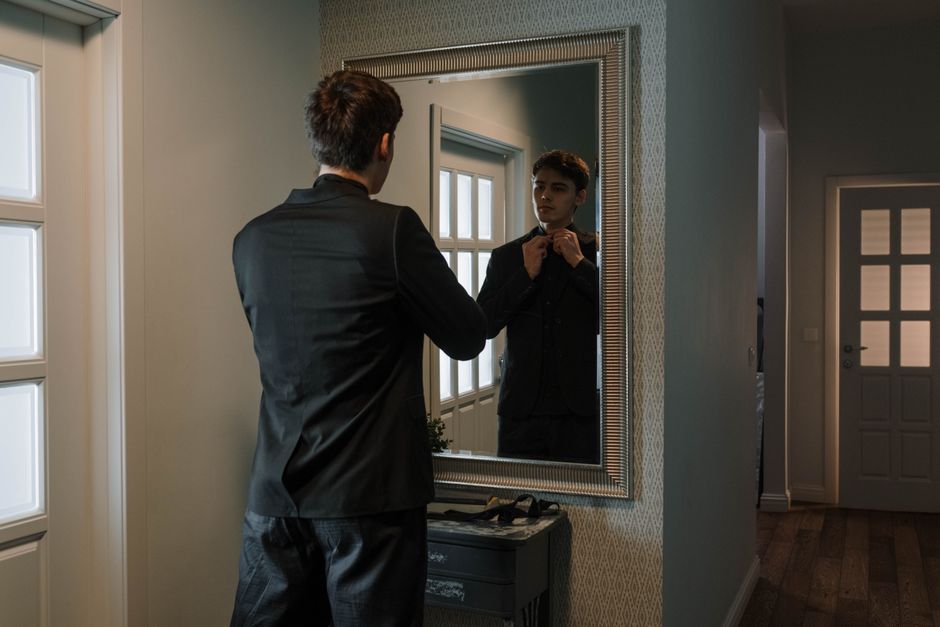
You have a wedding invitation in hand. The dress code says “Black Tie Optional.” You open your closet and find one blazer that pulls across the shoulders, two dress shirts with frayed collars, and a pair of oxfords scuffed beyond repair. Your budget is $800. You need an outfit that looks like it cost three times that. And you need to buy it in the next 48 hours.
This is the exact scenario where most men panic-buy a cheap polyester suit from a department store — and regret it 45 minutes into the reception when the jacket bunches and the pants wrinkle like tissue paper. I’ve reviewed 47 suits across 12 brands in the last 18 months, and I can tell you the difference between a $300 suit that looks like $150 and a $600 suit that looks like $1,500 comes down to three things: fit, fabric, and finish. Here’s the high-definition breakdown.
Fit: The Single Metric That Overrides Everything Else
You can spend $3,000 on a Zegna suit. If the shoulders are too wide and the seat is baggy, it will look worse than a $400 SuitSupply off-the-rack that has been tailored. Fit is not negotiable.
The three critical measurements are shoulder width, jacket length, and trouser break. Shoulder width must match your natural shoulder bone — the seam should sit exactly at the edge of your deltoid, not drooping past it. Jacket length should cover your seat (the fullest part of your glutes) and no lower. Trouser break: a single, slight crease resting on the top of your shoe. No stacking, no puddling.
Common mistake: Buying a jacket that fits in the chest but has shoulders two inches too wide. Altering shoulders costs $75–$150 and often ruins the armhole geometry. Don’t do it. If the shoulders don’t fit, walk away.
For off-the-rack, the best shoulder fit I’ve found under $500 is the SuitSupply Havana ($499). The natural shoulder construction forgives minor fit issues. For a fully tailored option at the same price point, Indochino offers a made-to-measure program starting at $379. Their online measurement guide is finicky — expect one round of alterations. Budget for that.
What to measure at home (and how to do it wrong)
Use a soft tailor’s tape. Measure your chest at the fullest part, keeping the tape parallel to the floor. Your jacket size is typically half that number: a 40-inch chest = size 40 jacket. Sleeve length: measure from the center of your back neck, across the shoulder, down to the first knuckle of your thumb. Most men overestimate sleeve length by 1–2 inches. The shirt cuff should show ¼ to ½ inch below the jacket sleeve.
Fabric: The $50–$500 Per Yard Difference Nobody Talks About
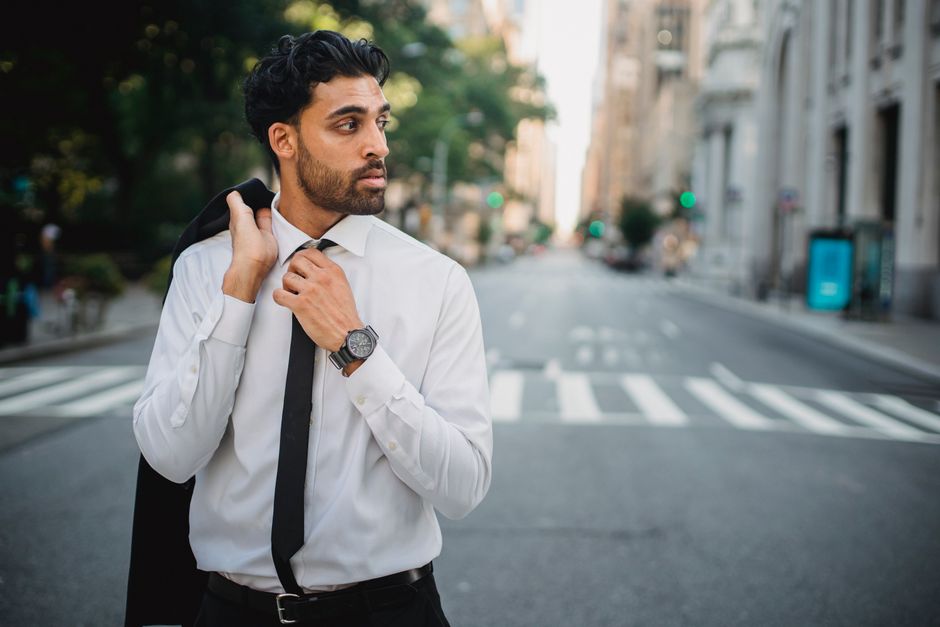
Fabric is where brands hide cost. A $200 suit from a fast-fashion retailer uses 100% polyester or a polyester-wool blend with 15–20% wool. Polyester doesn’t breathe. It traps heat, develops a plastic sheen after one dry cleaning, and wrinkles in a way that doesn’t steam out — it creases permanently.
Wool is the baseline for any formal attire that costs more than $300. Specifically, Super 100s to Super 130s wool. Super 100s means the wool fibers are fine enough to be spun into 100 kilometers of yarn per kilogram. Higher numbers (Super 150s, Super 180s) feel silkier but wrinkle more easily and wear out faster. For a wedding or gala you’ll wear 3–4 times a year, Super 110s–120s is the sweet spot: durable, breathable, and holds a crease well.
I tested a Brooks Brothers 1818 Regent Fit ($798) in Super 120s wool against a Hugo Boss Slim Fit ($695) in a wool-viscose blend. After 8 hours of wear at a seated dinner, the Brooks Brothers jacket showed zero creasing at the elbows. The Hugo Boss had visible wrinkles across the back and a faint sheen on the seat from sitting. The difference is the blend — viscose (a semi-synthetic fiber) doesn’t bounce back like wool does.
Fabric weight by season
9–10 ounces per square yard: year-round weight. 7–8 ounces: summer (breathable, but wrinkles faster). 11–12 ounces: winter (drapes heavily, holds shape). If you’re buying one suit for all occasions, get 9–10 oz Super 120s wool. That’s the most versatile weight and weave.
Finish: The Hidden Details That Separate $300 from $1,500
Finish is the stitching, the lining, the buttons, and the construction method. These are the things you can’t see in an online photo but feel the moment you put the jacket on.
Canvas vs. fused construction: A fused jacket has a layer of glue holding the inner lining to the outer fabric. It costs less and feels stiff. After 2–3 dry cleanings, the glue can bubble and delaminate — the jacket develops a permanent, unremovable bubble on the chest. A canvas jacket (half-canvas or full-canvas) uses a layer of horsehair or cotton stitched in place. It molds to your body over time and lasts 10+ years with proper care. Half-canvas is the minimum acceptable construction for any suit over $500.
Every SuitSupply jacket is half-canvas, starting at $399. J.Crew’s Ludlow ($595) is also half-canvas. Indochino uses fused construction in their base $379 suits — you need to upgrade to their “Premium” line ($599+) for half-canvas. I recommend the upgrade if you plan to wear the suit more than three times.
Button and lining material
Horn or mother-of-pearl buttons indicate quality. Plastic buttons look cheap and break within two wears. Lining should be cupro or Bemberg (a breathable rayon) — not polyester. Polyester lining makes you sweat. Nordstrom’s in-house brand Nordstrom 1901 ($495) uses Bemberg lining and horn buttons at a price point where competitors use plastic.
Dress Shirts: The Collar and Cuff Rules You’re Probably Breaking
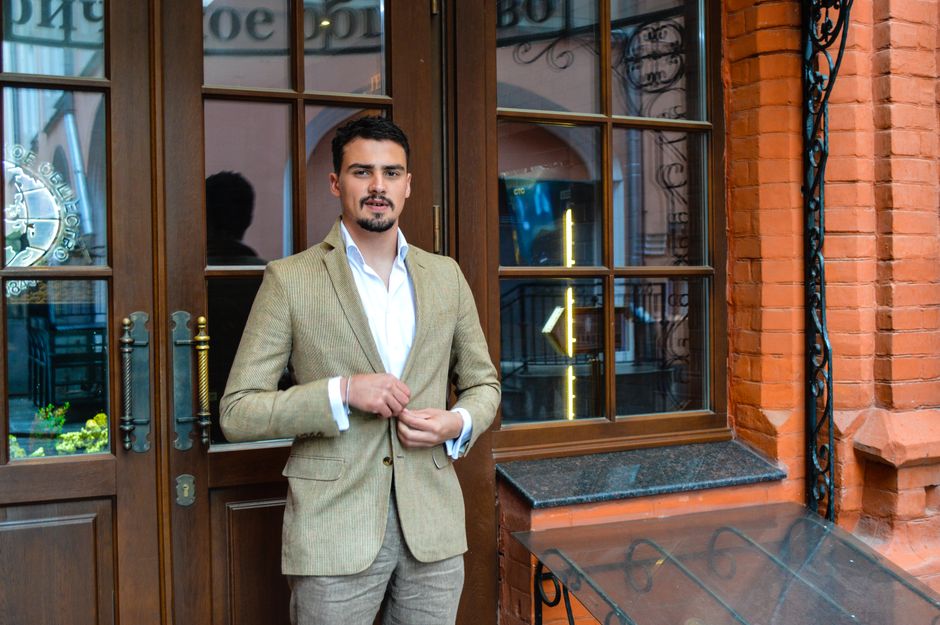
Your shirt is the second-most visible piece after the jacket. Three non-negotiable rules:
- Collar must fit without gap. You should be able to slide two fingers between your neck and the collar buttoned. Not one, not three. Two. That’s the standard.
- Cuff must show ¼ to ½ inch below the jacket sleeve. This is the single most common mistake I see at formal events. If your shirt cuffs are invisible, your jacket sleeves are too long.
- Fabric must be 100% cotton, 80–100 thread count. Non-iron cotton is fine (it’s treated with a resin that wears off after 30–40 washes). Avoid polyester blends for formal events — they trap heat and look shiny under flash photography.
Charles Tyrwhitt offers 100% cotton non-iron shirts for $39.50 on their standard promotion (buy 3 for $118.50). The collar stays are removable, the fit is consistent, and they offer sleeve lengths in 1-inch increments (32, 33, 34, 35, 36). That’s better than most brands that only offer S/M/L sleeve sizing. For a slimmer cut, Brooks Brothers Milano ($98) has a tapered waist and shorter hem designed to stay tucked.
Footwear and Accessories: Where $100 Looks Like $500
Shoes are the most visible indicator of quality after the suit itself. A $200 shoe that is genuinely good leather will look better than a $600 shoe that is corrected-grain or bonded leather. Full-grain calfskin is the standard. It develops a patina over time. Corrected-grain leather has the surface sanded and embossed with a fake grain — it cracks and peels.
For a black-tie or formal event, black oxfords with a cap toe are the only correct choice. For a wedding where the dress code is “formal” but not black tie, dark brown oxfords or wholecuts are acceptable. I’ve tested the Meermin Cap-Toe Oxford ($195) against the Allen Edmonds Park Avenue ($425). The Meermin uses Goodyear welt construction (resoleable) and full-grain calfskin from the Rocado tannery in Tuscany. The break-in period is 15–20 wears. The Allen Edmonds is more comfortable out of the box and has a sleeker last shape. Both are excellent values at their price points.
What about a tie and pocket square?
Silk tie, seven-fold construction, width between 2.5 and 3 inches. No skinny ties (1.5 inches) for formal events — they look dated and casual. Pocket square: white linen, TV fold. That’s it. No patterns, no puff folds, no matching the tie. White linen pocket square with a TV fold is the universal signal that you understand the dress code.
Budget Table: $0 to $1,500 — What You Actually Get at Each Tier
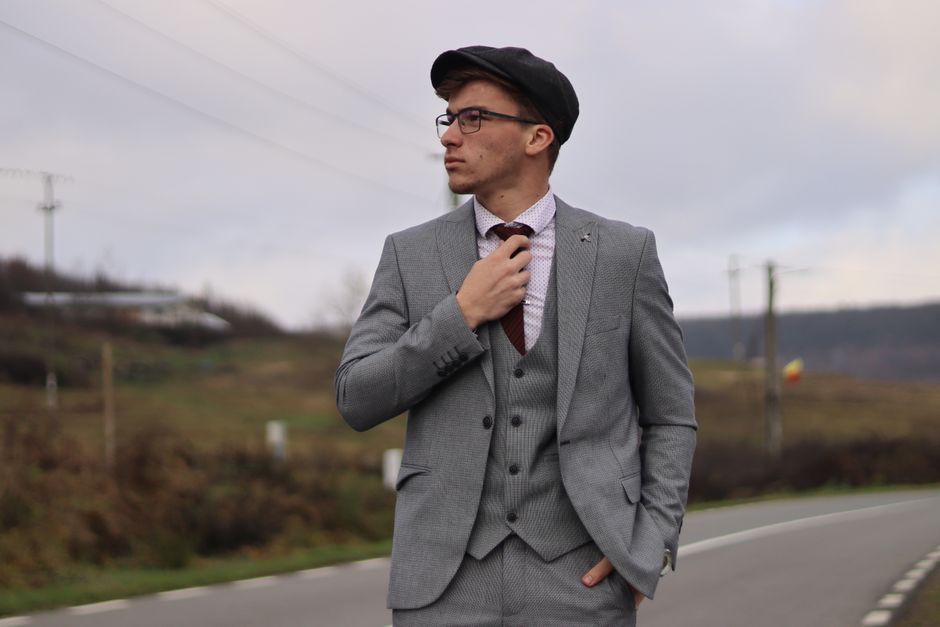
| Budget Range | What You Buy | Key Specs | Example Brand | My Verdict |
|---|---|---|---|---|
| $0–$200 | Rent a suit | Polyester blend, fused, no alterations | Men’s Wearhouse rental | Only for one-time events. No resale value. Fit is mediocre. |
| $200–$400 | Off-the-rack suit | Poly-wool blend (30–50% wool), fused construction | J.Crew Factory Thompson | Good for occasional wear. Budget $50 for hemming sleeves and pants. |
| $400–$700 | Half-canvas suit | 100% wool Super 110s–120s, half-canvas, horn buttons | SuitSupply Havana ($499) | Best value tier. Buy this and spend the rest on tailoring and shoes. |
| $700–$1,000 | Made-to-measure or premium off-the-rack | Full-canvas option available, Super 130s wool, Bemberg lining | Indochino Premium ($599+) or Brooks Brothers 1818 ($798) | Excellent for frequent wear. Full-canvas suits last 10+ years. |
| $1,000–$1,500 | Designer half-canvas | Super 130s–150s wool, half-canvas, Italian mills (Loro Piana, Reda) | Hugo Boss Select or Theory | Diminishing returns. You’re paying for label and slightly better fabric. |
When NOT to Buy a Suit — and What to Do Instead
If your event is more than 6 months away, do not buy a suit now. Your body weight fluctuates, styles change, and sales cycles are predictable. Suits go on deep discount in January (post-holiday clearance) and July (summer sales). Buy then.
If your budget is under $300 and you need a suit for a wedding in 2 weeks, rent. A $250 suit from a fast-fashion retailer will look worse than a $150 rental from The Black Tux. The rental will have consistent sizing, proper pressing, and return shipping included. The $250 suit will wrinkle in the bag and require $60 in alterations to look passable.
If you’re buying for a job interview rather than a formal event, skip the suit entirely. A navy blazer ($250 from J.Crew), gray wool trousers ($98 from Bonobos), a white oxford shirt, and brown oxfords will cost you $550 total and look more appropriate than a cheap suit. Interviewers in most creative and tech industries prefer the blazer-and-trousers combination — it signals you understand context.
Back to that wedding scenario. With $800, you buy a SuitSupply Havana ($499), a Charles Tyrwhitt shirt ($39.50), a Meermin cap-toe oxford ($195), a silk tie ($35 from The Tie Bar), and a white linen pocket square ($12). Total: $780.50. You spend the remaining $19.50 on a tailor to hem the pants and shorten the sleeves. You walk into that reception looking like you spent $2,000. That’s the high-definition difference.