
Buying clothes on Amazon is a form of low-stakes gambling. You see a photo of a woman looking effortlessly chic in a ‘chunky knit’ and you think, yeah, that’ll be me. Then the package arrives and you realize you’ve just paid $40 for a garment that has the structural integrity of a wet paper towel and smells faintly of a chemical plant in a province you can’t pronounce. It’s exhausting. I’ve been burned so many times that my closet is basically a graveyard of ‘good on paper’ knitwear.
The time I looked like a discarded bathmat
It was November 2021. I had a big presentation for a project I’d been working on for six months—real high-stakes stuff. I wanted to look ‘approachable but professional,’ which is the lie we tell ourselves when we want to wear pajamas to work. I bought this highly-rated ‘oversized popcorn knit’ cardigan in a shade called ‘Apricot.’ On the screen, it looked like something a coastal grandmother would wear while drinking expensive tea. In reality? I looked like I had skinned a Muppet and was wearing its pelt.
I walked into the conference room and the static electricity coming off the 100% acrylic fibers was so intense that I actually shocked my boss when we shook hands. Every time I moved, little clumps of orange fuzz drifted onto the mahogany table. I spent the whole meeting trying to subtly pick lint off my black slacks while explaining Q4 projections. It was humiliating. I felt cheap. Not because the sweater was inexpensive, but because it was bad. Anyway, I threw it in a donation bin on the way home, though I honestly should have just burned it to save someone else the embarrassment.
That experience turned me into a bit of a freak about fabric composition. I started tracking things. I actually kept a spreadsheet for a while (don’t judge me) where I logged the price, the listed materials, and how many washes it took before the sleeves started looking like they belonged to a different sweater. I tested 14 different brands over two years. Most of them failed the ‘three-wash test’ miserably.
The only ones that don’t suck
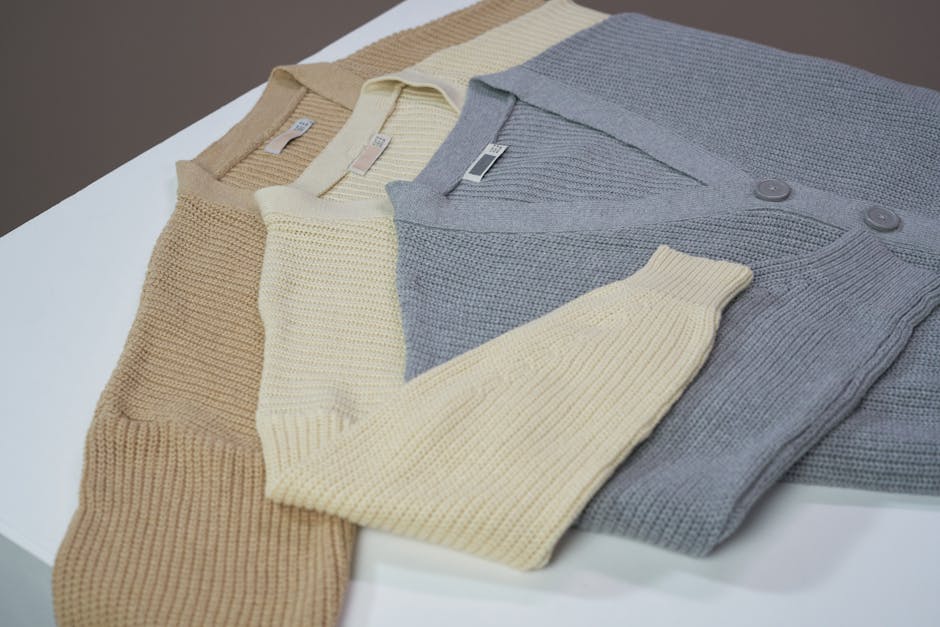
I’m just going to give it to you straight. Most of the brands with names that sound like they were generated by a cat walking across a keyboard—like ANRABESS or ZESICA—are hit or miss. Mostly miss. I hate the name ANRABESS. It sounds like a medication for chronic foot fungus. I refuse to buy from them on principle now, even if everyone on TikTok says their stuff is ‘buttery soft.’ It’s not butter. It’s plastic.
Here is the short list of what survived my testing:
- The Amazon Essentials Lightweight V-Neck: It’s boring. It’s basic. But it’s 55% cotton. I’ve washed mine 12 times and the pilling is minimal—about 0.4mm of fuzz height if I’m being precise. It actually breathes.
- Goodthreads Boucle Cardigan: This one is surprisingly heavy. It weighs about 680 grams, which gives it a drape that doesn’t make you look like a shapeless blob.
- MEROKEETY Long Sleeve Snap Button: I know, the brand name is annoying. But the ribbing on the cuffs is tight enough that they don’t stretch out after an hour of pushing your sleeves up.
That’s it. Those are the only three I’d actually tell a friend to buy. Everything else is a gamble I’m no longer willing to take.
I genuinely think people who wear cardigans with zippers are untrustworthy. It’s a sweater, not a scuba suit. Pick a side.
The ‘Oversized’ lie
What I mean is—actually, let me put it differently. The word ‘oversized’ on Amazon is code for ‘we didn’t bother with tailoring.’ A real oversized sweater should still have some sense of where your shoulders actually are. Most of these Amazon cardigans just have these massive, cavernous armholes that make you look like a flying squirrel. I used to think I just needed to size down. I was completely wrong. Sizing down just makes the sleeves too short while the body stays ridiculously wide.
I might be wrong about this, but I think the ‘open front’ cardigan trend is a scam invented by manufacturers to save money on buttons and zippers. It’s half a garment. If it doesn’t close, it’s just a decorative blanket with sleeves. I’ve started carrying safety pins in my purse just to keep these things from sliding off my shoulders when I’m trying to carry groceries. It’s a design flaw we’ve all just accepted as ‘fashion.’
A very specific rant about ‘Softness’
People in Amazon reviews have no idea what ‘soft’ means. They get a sweater that feels like a microfiber cleaning cloth and they give it five stars because it’s ‘soooo soft.’ That’s not softness; that’s a lack of fiber integrity. Real wool—even a blend—should have a little bit of hair to it. It should feel like it came from an animal, not a laboratory.
I bought a $45 cardigan last month that was advertised as a ‘cashmere feel’ blend. I tracked the wear on the elbows. After exactly 14 hours of desk work, the friction against my armrests had worn the fabric down by nearly 30% in thickness. It’s disposable clothing. It’s gross. We’re filling landfills with ‘buttery soft’ polyester that will outlive our grandchildren.
I’ve become that person who checks the inner tag before I even look at the mirror. If I see more than 40% acrylic, I’m out. I don’t care how cute the pattern is. I’m done being a human lint trap.
I still find myself scrolling through the ‘New Releases’ at 11 PM sometimes, though. There’s this one cable-knit in ‘Burnt Orange’ that’s been sitting in my cart for three days. It’s probably garbage. The reviews say it ‘runs large’ and ‘feels like a cloud,’ which we all know is code for ‘will lose its shape by Tuesday.’
Why do I still want it? Maybe I’m just hoping that this time, the gamble will actually pay off and I’ll find that one perfect sweater that makes me feel like a person who has their life together. But I probably won’t.
Does anyone actually own a cardigan they’ve had for more than five years, or are we all just cycling through these $30 mistakes forever?